A new category of urban utility vehicle.
Compact, foldable utility platform for last-mile, campus, and shared mobility.
The white space in urban mobility.
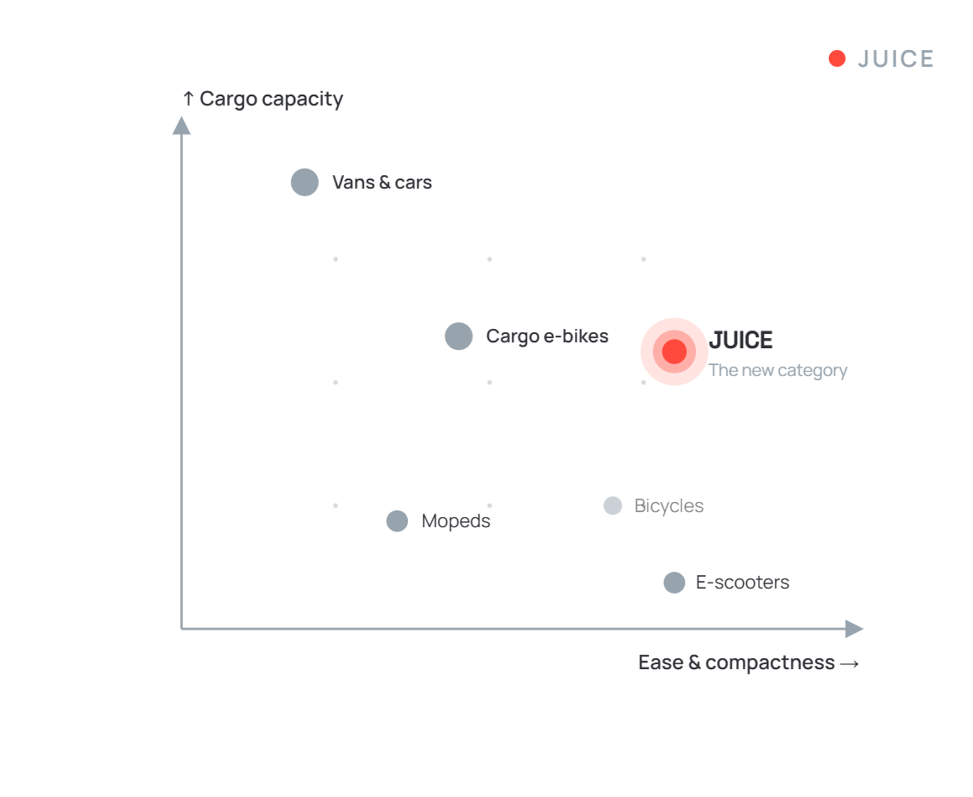
Today's fleet operator picks between vehicles that don't quite fit the job. E-scooters and mopeds are nimble but carry nothing. Cargo bikes carry the load but demand cycling ability, dedicated parking, and €5–8K of capex. Vans dominate the city — and are being pushed out of it by every Low Emission Zone in Europe.
Juice sits in the gap between them — built for the jobs all three are bad at.
A new urban utility platform.
Juice is a three-wheel, stand-up electric utility vehicle that combines the cargo capacity of a cargo bike with the agility and footprint of a scooter. EPAC classification — no driver's license, no registration, no insurance — and no LEZ exposure in any of the 320+ European cities introducing zero-emission zones by 2030.
Compact
Foldable platform, fits inside a standard freight elevator or the cargo bay of a delivery van. Designed for intermodal hub-and-spoke operations.
Safety-first
Stable reverse-trike geometry. Standing rider position. Built for predictable, confidence-inspiring operation — especially for new and non-cyclist riders.
Inclusive
~30 minutes of onboarding versus 2–3 days for a cargo bike. Accessible to operators across age, fitness, and prior cycling experience.
TCO advantage
Significantly lower 5-year total cost of ownership than cargo bikes or electric vans. Lower maintenance complexity. Swappable battery.
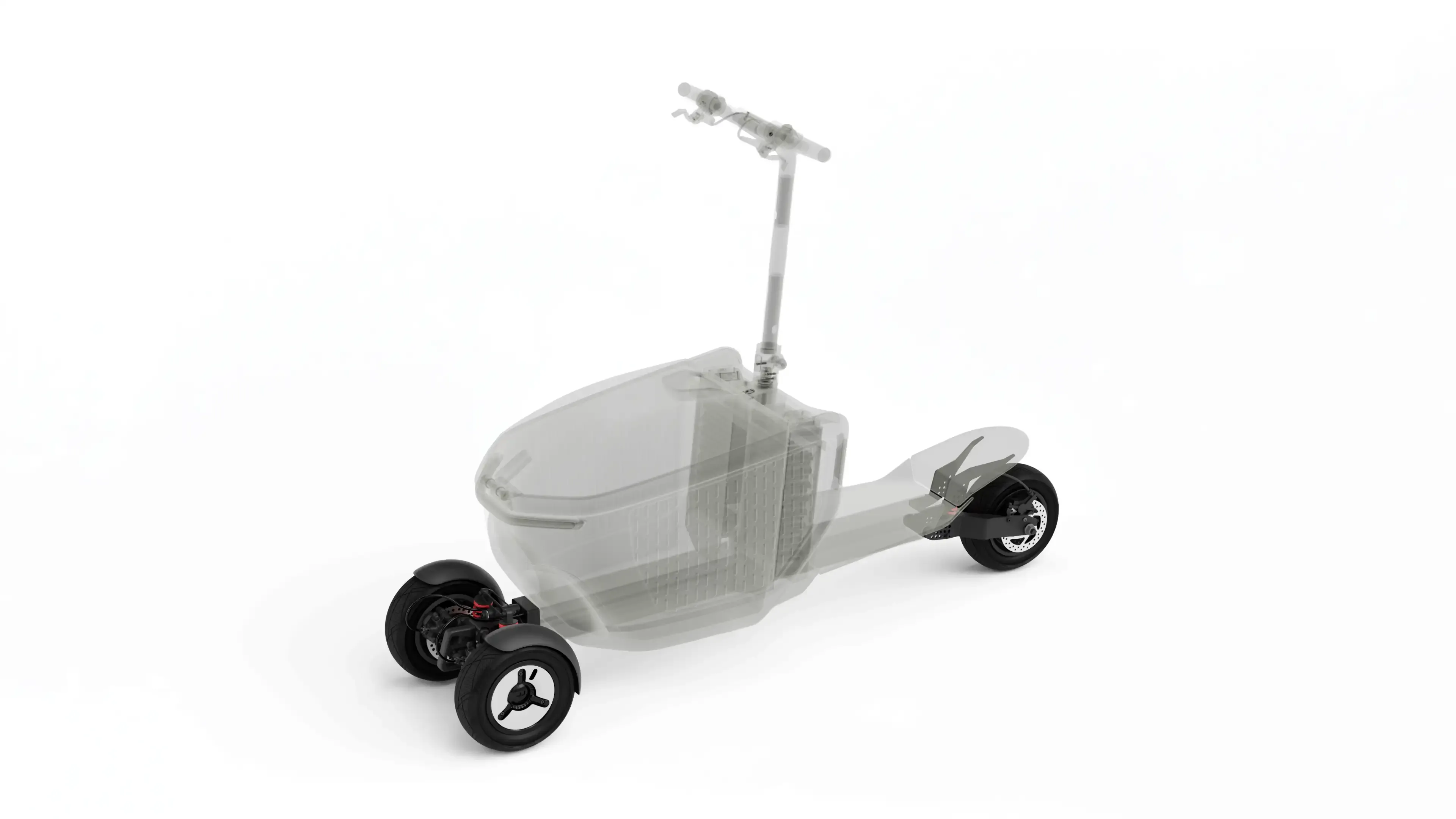
3 wheel
Stable platform
25 kg
Curb weight

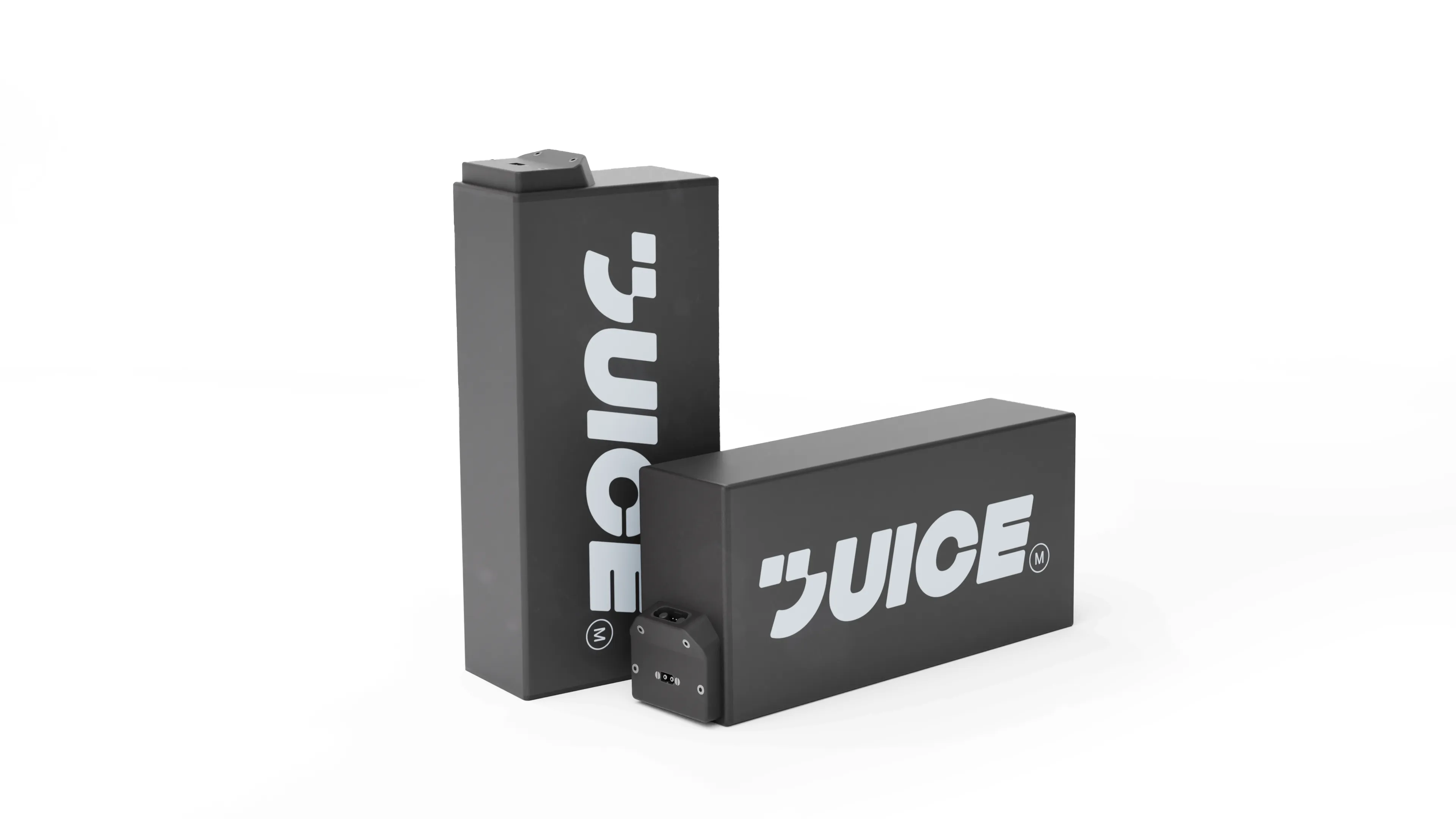
Removable batteries
Sub-60-second swap
Lockable smart cargo box
Audit-trailed via Juice OS
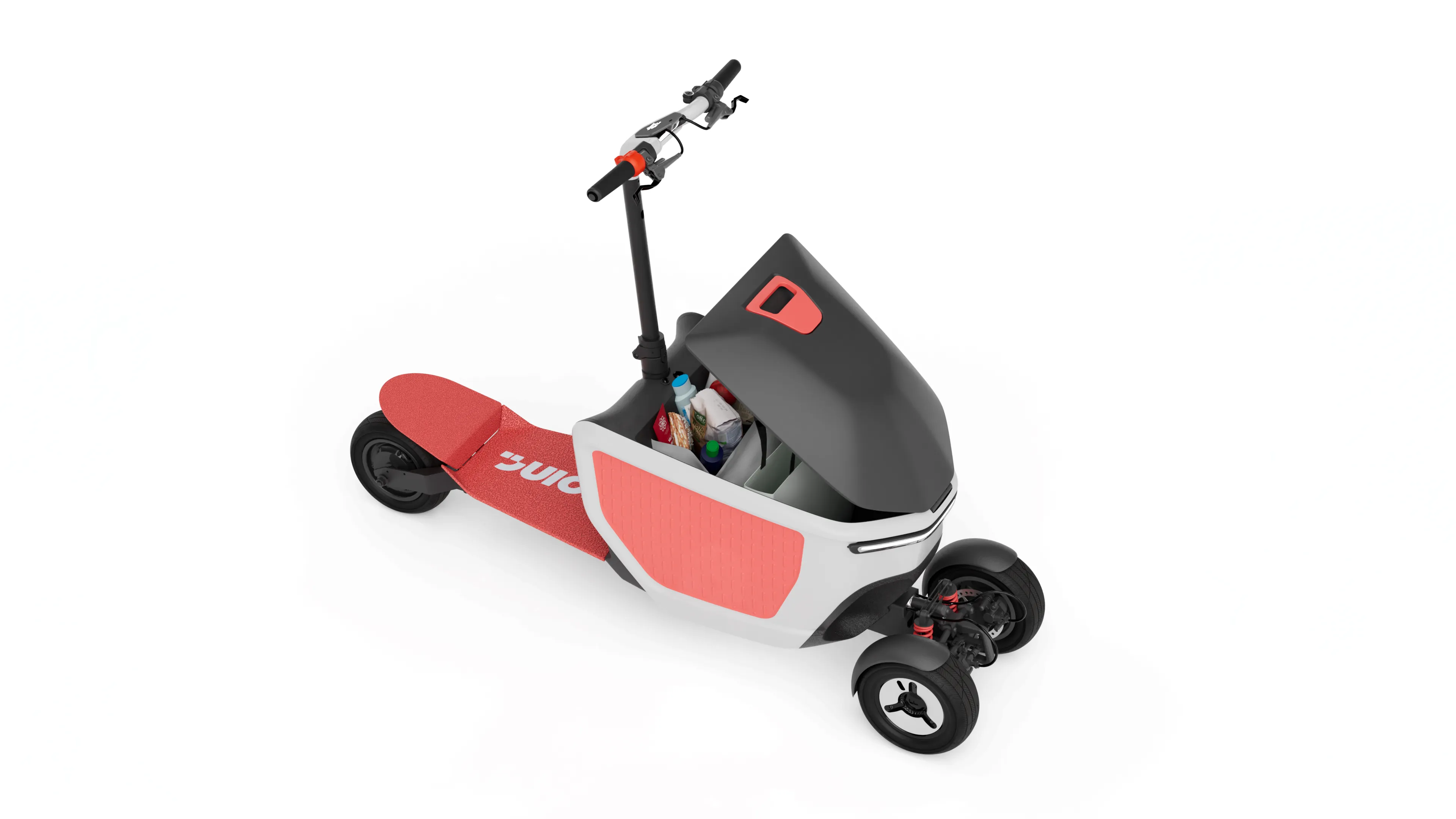

Connected system
API-first fleet OS
60–100 km
Range per charge

Four use cases. One platform.
Same vehicle. Same fleet OS. Different operating environments and commercial models.
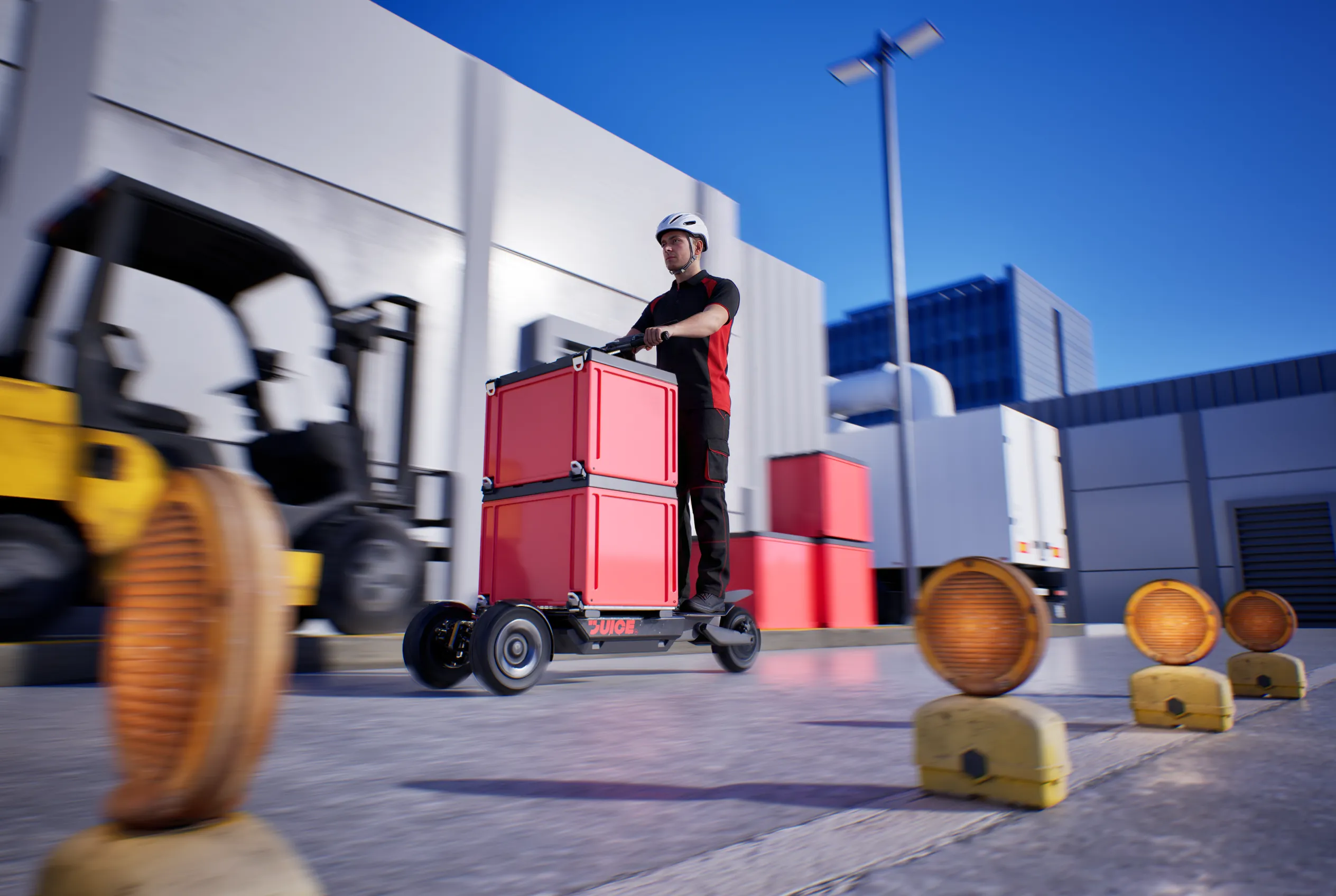
Campus & facility
Internal logistics for universities, hospitals, industrial parks, ports, airports, and event venues. Fits inside buildings, freight elevators, and ZEZ zones.
Discuss a pilot →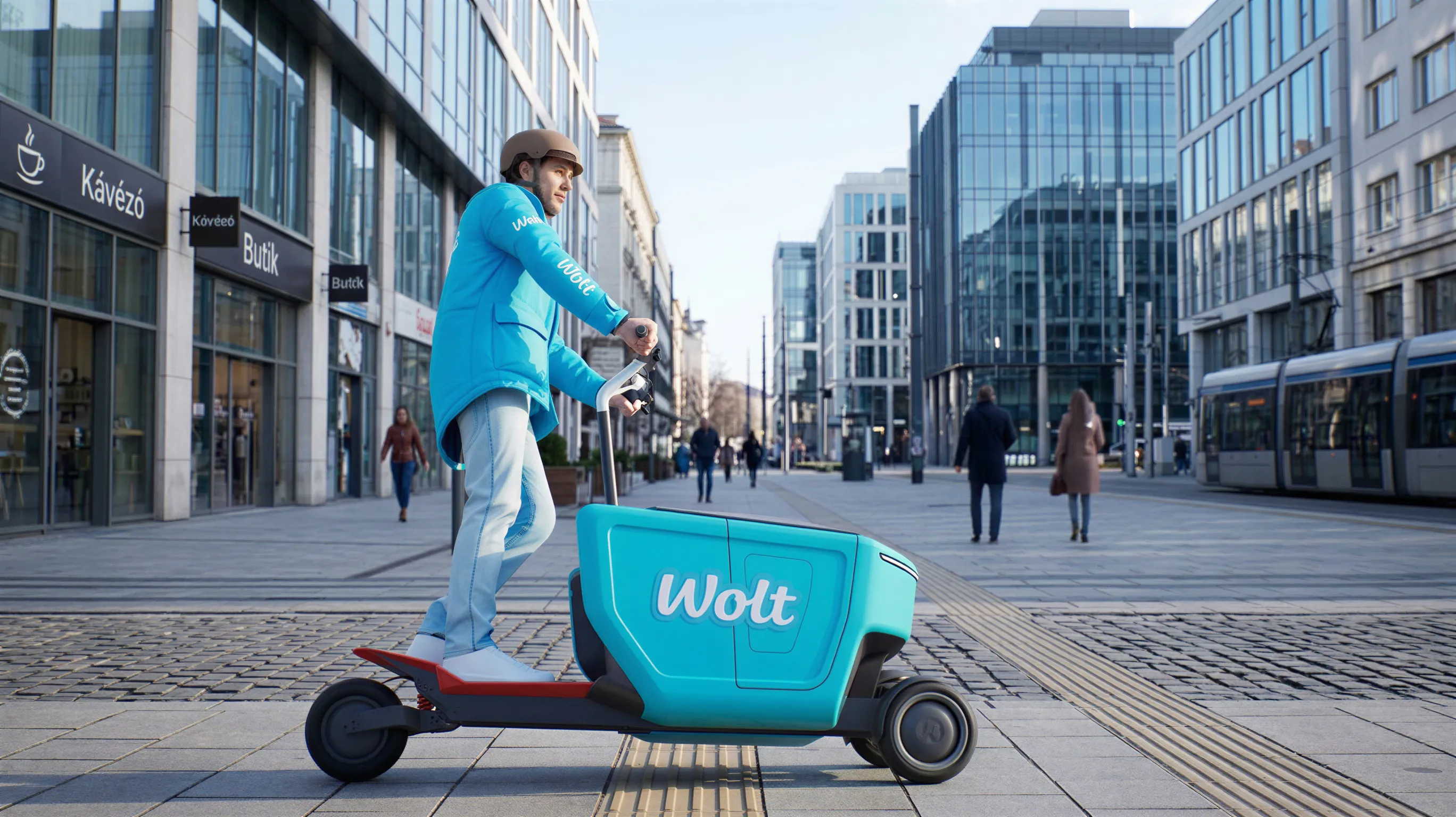
Last-mile delivery
The vehicle for the kilometre before the doorbell. Foldable for van-and-last-mile intermodal operations. Stable enough for non-cycling couriers.
Discuss a pilot →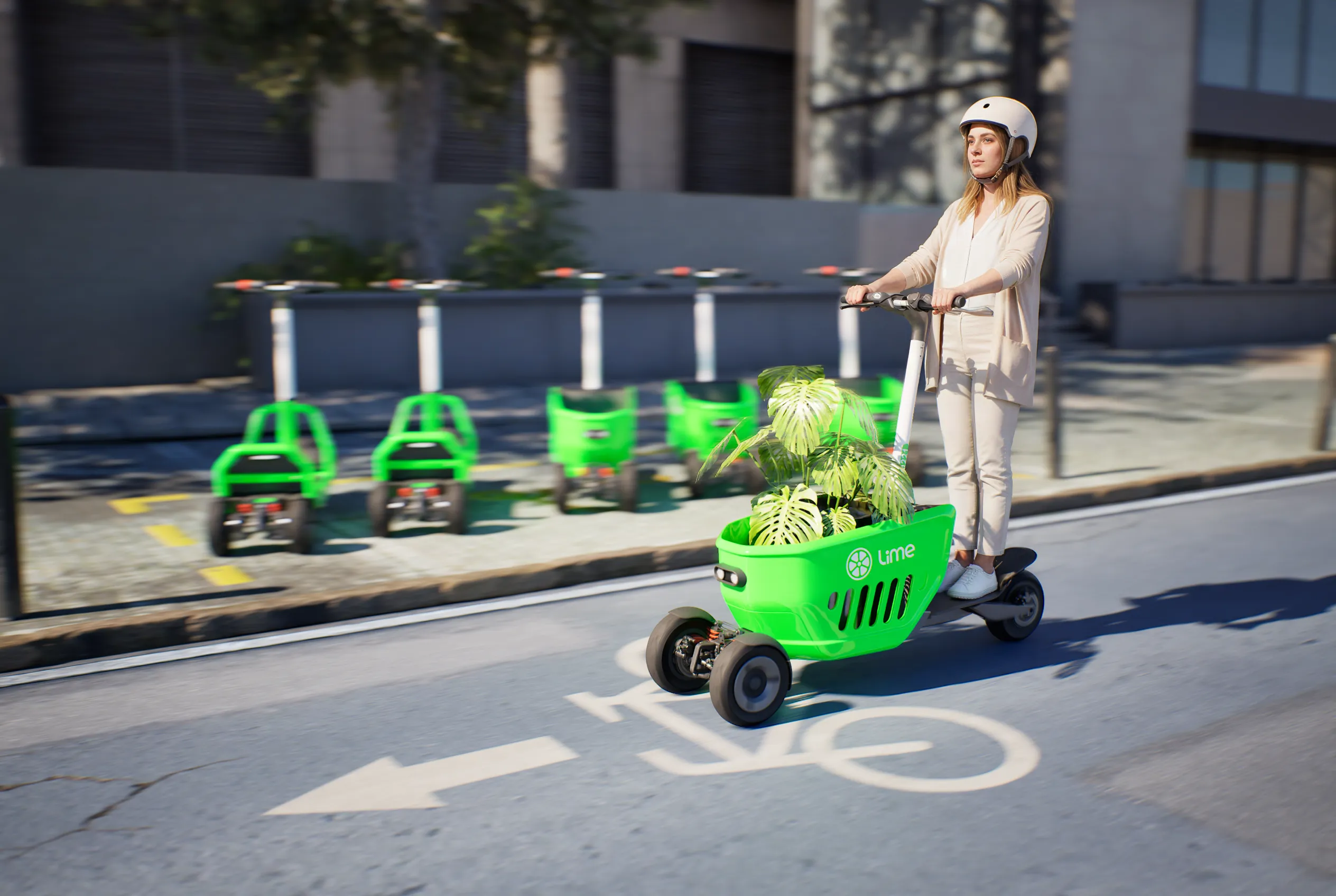
Shared fleet
Built for shared-fleet operations from day one: swappable batteries with sub-60-second swap, geofencing and remote lock via Juice OS.
Discuss a pilot →
Urban operations
Municipal fleet for parking control, public-space maintenance, urban gardening, and inspector mobility. Zero emissions, LEZ-cleared, no license required.
Discuss a pilot →Four use cases. One platform.
Same vehicle. Same fleet OS. Different operating environments and commercial models.
Last-mile delivery
The vehicle for the kilometre before the doorbell. Foldable for van-and-last-mile intermodal operations. Stable enough for non-cycling couriers.
Discuss a pilot →Campus & facility
Internal logistics for universities, hospitals, industrial parks, ports, airports, and event venues. Fits inside buildings, freight elevators, and ZEZ zones.
Discuss a pilot →Shared fleet
Built for shared-fleet operations from day one: swappable batteries with sub-60-second swap, geofencing and remote lock via Juice OS.
Discuss a pilot →City operations
Municipal fleet for parking control, public-space maintenance, urban gardening, and inspector mobility. Zero emissions, LEZ-cleared, no license required.
Discuss a pilot →Three forces have converged. Juice sits at the intersection.
The vehicle landscape urban operators inherited is being legislated out. The replacements are growing fast — and starting to consolidate around platform-procurement. The technical preconditions are now in place. The window is open for a few years.
01 — REGULATION
Diesel is being legislated out of the city.
320+ European cities will introduce Low Emission Zones by 2030. Amsterdam banned diesel vans from the city centre in 2025. London ULEZ has been city-wide since 2023. The vehicle landscape urban operators inherited is being legislated out.
02 — MARKET
The replacement category is consolidating fast.
Cargo e-bikes growing 14% CAGR, approaching €18B by 2035 — but hitting an operational ceiling (cycling-ability requirement, payload limit, no native fleet integration). Amazon EU runs 10,000+ standardised cargo vehicles. DHL, UPS, and PostNL have moved to platform-based procurement. The market favours platforms with proven references — and shuts out new suppliers within two to three years.
03 — TECHNOLOGY
The technical preconditions finally exist.
Reverse-trike active suspension is now manufacturable at viable cost. Swappable battery standards came into EU regulation in 2024. API-first fleet OS layers integrate into legacy TMS without rebuilding them. The preconditions Juice needs are no longer 5-year horizons — they exist today.
Where we are. Who's with us.
Red Dot Concept Award 2025
International design recognition — issued, public, verifiable.
MK1 working · MK2 in development
MK1 prototype operational. MK2 functional prototype in active development with a senior engineering team.
EIT Urban Mobility Jumpstarter
Selected for the 2026 cycle — the EU's structured pilot-validation programme for urban mobility hardware.
BME Műegyetem · MOME · Bosch* — * Bosch Budapest: closed-site campus pilot in preparation, scheduled H2 2026.
Founder team,
built for this category.
A founding team with industrial design, mechanical engineering, and software backgrounds. Advisors from urban mobility, manufacturing, and venture investing.

Daniel Ruppert
CEO & Co-founder
3× Red Dot-winning strategist and designer · 50+ brands & products built, from light EVs to high-end motorhomes · MOME lecturer. Owns product, business strategy and the route to market — and took Juice from concept to a working prototype.
LinkedIn →
Daniel Antal
CTO & Co-founder
~200 bike & e-bike models brought to market · scaled production to 7,000 units/year · helped expand Gepida into 30 markets. Owns engineering, BOM and the path to series production — turning concepts into reliable, manufacturable products.
LinkedIn →
Krisztian Szabo
Head of Platform & Co-founder
Software and firmware expertise supporting development of Juice Advisor and Juice OS.
LinkedIn →Tímea Lendvai · Márk Lelkes · Krisztián Kun
Run a Juice pilot in your operation.
For fleet operators.
Five to thirty vehicles, three to six months, one defined operating site. We bring the platform, the data framework, and the on-site support. You bring the route, the team, and the reference.
For investors.
Pre-seed conversation underway with select strategic and financial investors. Full deck on request to qualified parties.
Investor inquiries →